
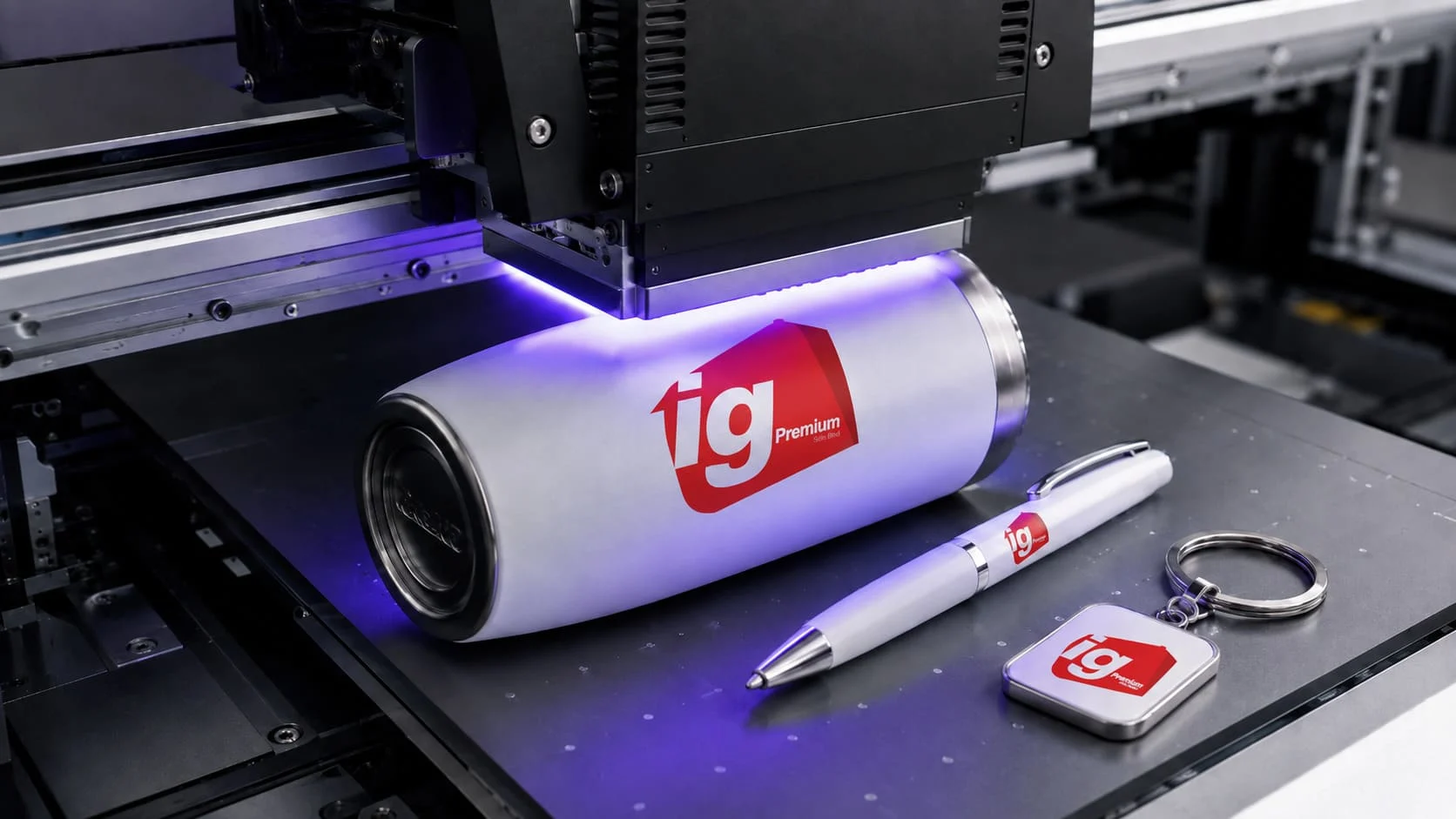
UV logo printing works by depositing specially formulated ink onto a gift surface and using UV light to cure it almost instantly, producing sharp, full colour branding. Prints peel, scratch, or fade when the material and ink do not bond properly, or when curing is incomplete, even if the logo looks fine on day one.
For Malaysian businesses ordering corporate gifts in bulk, durability is not a nice to have. A logo that rubs off a tumbler, pen, or keychain can undermine the brand message you planned for a client event, staff appreciation programme, or campaign rollout. Below is how we evaluate durability and what buyers can request from suppliers, especially for common materials used across Klang Valley procurement.
How Does UV Logo Printing Work?
UV printing uses ultraviolet light to cure the ink immediately after it is printed. The quick cure supports high resolution output on many popular corporate gift materials, including plastics and metals, because the ink does not need long drying time like conventional methods.
The key point for buyers is that “dry to the touch” is not the same as “fully cured”. A print can look clean and still fail later if the chemical cure was incomplete.
Why UV Printing on Metal and Plastic Behaves Differently
UV printing on metal and UV printing on plastic succeed or fail for different scientific reasons. Many plastics used in promotional items, such as polypropylene and polyethylene, have low surface energy. That means the surface naturally repels liquids, including ink, unless the surface is modified.
On non porous metals such as stainless steel or polished aluminium, ink does not automatically form a strong chemical bond either. Depending on the metal finish and ink system, additional surface preparation may be needed. If the appropriate preparation is skipped, the resulting print may have weaker scratch resistance.
4 Reasons UV Logo Printing Can Peel or Fade
The Surface Was Not Properly Cleaned
Dust, oil from handling, and residue from manufacturing can block adhesion. Even excellent inks struggle on a contaminated surface. Practical takeaway: ask your supplier what cleaning step they use before printing, and request that samples are handled the same way production items will be handled.
The Material Has Poor Ink Adhesion
Low surface energy plastics are a common culprit in corporate gifts, especially drinkware and containers made from polypropylene or polyethylene. Without surface modification, ink adhesion can be weak and peeling becomes predictable under scratching or repeated washing.
The Wrong Primer or No Pre Treatment Was Used
Primers and adhesion promoters exist for a reason. On difficult plastics, suppliers may use a chemical primer or a physical treatment such as flame or corona treatment to change the surface so ink can grip. On metals, a specialised adhesion promoter is often mandatory for durable UV printing on metal.
If you are comparing quotes, this is one of the most meaningful differences to clarify. Lower pricing sometimes reflects fewer process steps, not the same durability for less.
The Ink Was Not Properly Cured
Under-curing is a leading cause of weak prints. UV lamps that are old, positioned too far from the surface, or paired with print speeds that are too fast can leave ink only partially cured. The result may be lower scratch resistance and poorer resistance to chemicals.
Curing consistency matters even more in bulk orders, where equipment maintenance and process control decide whether every item performs the same way.
How Suppliers Should Check UV Print Quality Before Bulk Production
Visual inspection alone may not reveal adhesion problems. One recognised method for evaluating coating adhesion is the ASTM D3359 tape test. Depending on the test method used, cuts are made through the coating before pressure-sensitive tape is applied and removed. The amount of coating that detaches provides an indication of adhesion quality.
Certain plastics can also present longer-term adhesion challenges. For example, plasticisers or lubricants in some plastic materials may migrate toward the surface over time and interfere with the printed layer. Because plastic formulations can vary between manufacturers and even between production batches, suppliers should test the actual substrate before proceeding with a large order.
UV Logo Printing Checklist for Corporate Gift Buyers
- Confirm the exact material type, do not accept “plastic” as an answer. Ask specifically about polypropylene, polyethylene, PVC, stainless steel, or aluminium.
- Ask what surface treatment is used for low surface energy plastics, such as primer, flame treatment, or corona treatment.
- For metal items, request confirmation that an adhesion promoter is included, especially on polished surfaces.
- Ask whether an adhesion or cross-hatch tape test can be performed on the approved sample where appropriate.
- Describe real use conditions, for example frequent handling, rubbing in a bag with keys, or exposure to alcohol based hand sanitisers and cleaning agents.
- For high contact items, consider a clear coat or varnish to protect the printed layer from abrasion and chemical exposure.
Choose UV Printing Based on the Gift and Its Intended Use
The same artwork can behave very differently across substrates. A logo that holds well on a rigid plastic pen may fail on a soft touch plastic item if plasticiser migration is in play. Likewise, a crisp print on a coated metal surface may struggle on raw stainless steel without the correct adhesion promoter.
Durability is a chain. Surface preparation, compatible ink choice, complete curing, and optional protective coatings all affect the outcome of UV logo printing. There are also limitations worth keeping in mind: not all UV inks provide the same outdoor durability, and prolonged sunlight exposure can cause some colours and ink formulations to fade faster than others.
If you are preparing gifts for an outdoor campaign, a long running programme, or premium client kits, it is usually worth discussing process upgrades upfront rather than relying on a quick sample inspection.
Need help selecting a gift and print approach that suits your budget and risk level? Speak with us at IG Premium and request a quote based on your material, quantity, and intended use. For project specific guidance, use our enquiry form at Request A UV Printing Quote.